- Thermal energy is related to temperature and heat because it makes up an object with the particles inside it. The thermal energy of a material consists of the disordered motion of its atoms or molecules. Thermal energy can be transferred through materials or from one material to another by conduction (the collisions of atoms). If the material is fluid, convection currents transfer the thermal energy (convection). When thermal energy is transferred it is called heat. Temperature is a measure of the average kinetic energy of atoms and molecules in a material.
- An object made of a material with a higher heat capacity will take longer to get warm than one made with a lower-heat-capacity material (if the two are heated with the same power, say a microwave).
- The three forms are conduction, convection, and radiation. Conduction is say when I touch a table, the heat molecules will transfer from my hand to the table, which will produce heat to the table. Convection is when molecules within fluids go through a cycle and make motions. Radiation is the process of energetic particles that move and travel through open area.
- 5 * 10 * 2180 = 209,000 Joules
- If I had the option to either build a fire or put up a tent, I would put up a tent (conduction). I would do this because I would be in an inclosed area. The atoms would be tightly packed, which would make you in an insulated area. This would form heat for me to stay super, cozy warm!!!:)
Friday, November 19, 2010
Test Nine!

Wednesday, November 17, 2010
Objectives!!!
Objective One:
1. The three types are Fahrenheit, Celcius, and Kelvins.
2. Thermal energy is related to temperature and heat because it makes up an object with the particles inside it. The thermal energy of a material consists of the disordered motion of its atoms or molecules. Thermal energy can be transferred through materials or from one material to another by conduction (the collisions of atoms). If the material is fluid, convection currents transfer the thermal energy (convection). When thermal energy is transferred it is called heat. Temperature is a measure of the average kinetic energy of atoms and molecules in a material.
3. Specific heat is the amount of heat that raises the temperature by one degrees celcius. An example of high specific heat is water. Water depends on the high specific heat to stabalize its temperature.
4. An ice cube is cold and your hand is warm. When a cold item hits a warm object, it starts to melt. The heat molucles in your hand makes the ice cube turn into a liquid.
5. An object made of a material with a higher heat capacity will take longer to get warm than one made with a lower-heat-capacity material (if the two are heated with the same power, say a microwave).
Objective Two:
1. It measures temperature using mercury. This is so because mercury expands when it gets hotter, but gets smaller when it is colder. (Mercury is the liquid stuff inside the termometer)
2. They are all the same because they each give the temperature. Also Kelvins and Celcius are similiar because they have the same intervals/degrees. They are different because they are all placed differently on scales and you would have to convert them to find their equal.
3. 5.0 C would be equal to 41.0 F
4. 860 F would be equal to 460 C
5. 5*10*4180= 209000J
Objective Three:
1. The three forms are conduction, convection, and radiation.
2. Heat moves to hotter places, than to colder places.
3. Conductors and insulators are exactly the opposite. Conductors let energy pass through easily and insulators don't let much energy pass through them.
4. I would say that a cooper pipe would be more efficient as a conductor. I say this because it has more room for enerrgy to flow through it and it would be easier.
5. If I had the option to either build a fire or put up a tent, I would put up a tent (conduction). I would do this because I would be in an inclosed area. The atoms would be tightly packed, which would make you in an insulated area. This would form heat for me to stay super, cozy warm!!!:)
Objective Four:
1. Temperature makes matter change state. The hot particles change to more of a gas and the cold particles would change to more of a solid.
2. As thermal energy increases the substance could change to either a gas or a solid.
3. The temperature of matter stays the same because all of the temperature's energy is being put into the matter because it is changing its state.
4. A solid melts because the matter expands which causes the heat to act upon the solid. It soon melts away.
5. You should do this because when the potatoe heats up the matter inside it will expand, and without the holes the potatoe with EXPLODE!
Objective Five:
1. Heat engines use thermal energy by turning it into mechanical energy.
2. Internal combustion engines- Heat and gas is transfered to objects, which causes mechanical energy to produce.
External combustion engines- The internal working fluid gets heated up by an external source, which produces motions.
3. I think that they would use an internal combustion engine because you would put gas into your car, which would power up the vehicle to make it move.
4. The refrigerator would have no hot air in it because all of the heat is sucked out of it, which makes it really cold inside.
5. Everything in the refrigerator would get hot...nothing would be cold.
1. The three types are Fahrenheit, Celcius, and Kelvins.
2. Thermal energy is related to temperature and heat because it makes up an object with the particles inside it. The thermal energy of a material consists of the disordered motion of its atoms or molecules. Thermal energy can be transferred through materials or from one material to another by conduction (the collisions of atoms). If the material is fluid, convection currents transfer the thermal energy (convection). When thermal energy is transferred it is called heat. Temperature is a measure of the average kinetic energy of atoms and molecules in a material.
3. Specific heat is the amount of heat that raises the temperature by one degrees celcius. An example of high specific heat is water. Water depends on the high specific heat to stabalize its temperature.
4. An ice cube is cold and your hand is warm. When a cold item hits a warm object, it starts to melt. The heat molucles in your hand makes the ice cube turn into a liquid.
5. An object made of a material with a higher heat capacity will take longer to get warm than one made with a lower-heat-capacity material (if the two are heated with the same power, say a microwave).
Objective Two:
1. It measures temperature using mercury. This is so because mercury expands when it gets hotter, but gets smaller when it is colder. (Mercury is the liquid stuff inside the termometer)
2. They are all the same because they each give the temperature. Also Kelvins and Celcius are similiar because they have the same intervals/degrees. They are different because they are all placed differently on scales and you would have to convert them to find their equal.
3. 5.0 C would be equal to 41.0 F
4. 860 F would be equal to 460 C
5. 5*10*4180= 209000J
Objective Three:
1. The three forms are conduction, convection, and radiation.
2. Heat moves to hotter places, than to colder places.
3. Conductors and insulators are exactly the opposite. Conductors let energy pass through easily and insulators don't let much energy pass through them.
4. I would say that a cooper pipe would be more efficient as a conductor. I say this because it has more room for enerrgy to flow through it and it would be easier.
5. If I had the option to either build a fire or put up a tent, I would put up a tent (conduction). I would do this because I would be in an inclosed area. The atoms would be tightly packed, which would make you in an insulated area. This would form heat for me to stay super, cozy warm!!!:)
Objective Four:
1. Temperature makes matter change state. The hot particles change to more of a gas and the cold particles would change to more of a solid.
2. As thermal energy increases the substance could change to either a gas or a solid.
3. The temperature of matter stays the same because all of the temperature's energy is being put into the matter because it is changing its state.
4. A solid melts because the matter expands which causes the heat to act upon the solid. It soon melts away.
5. You should do this because when the potatoe heats up the matter inside it will expand, and without the holes the potatoe with EXPLODE!
Objective Five:
1. Heat engines use thermal energy by turning it into mechanical energy.
2. Internal combustion engines- Heat and gas is transfered to objects, which causes mechanical energy to produce.
External combustion engines- The internal working fluid gets heated up by an external source, which produces motions.
3. I think that they would use an internal combustion engine because you would put gas into your car, which would power up the vehicle to make it move.
4. The refrigerator would have no hot air in it because all of the heat is sucked out of it, which makes it really cold inside.
5. Everything in the refrigerator would get hot...nothing would be cold.
Thursday, November 11, 2010
Objectives
Objective 1: Measuring Matter
1. Whenever you go to a different place your weight changes, but when you travel to a different place your mass never changes; it is more accurate to go by mass.
2. 619.65cm3
3. cm3 or ml3
4. m/v or g/cm3
5. L * W * H
Objective 2: Changes in Matter
1. Chemical Change- when bonds are formed or broken between atoms (a new substance is formed)
Physical Change- a change not involving a change in the substance’s chemical identity (no new substances are formed)
2. - solid is made
- object changes color
- gasses are formed
- heat, light, and sound are made
3. The conservation law of mass describes that mass in a container stays the same as it first was over time. Epicurus created this law; he was an ancient Greek philosopher.
4. Thermal energy is actual energy, while temperature isn’t energy. Also thermal energy is the total amount of kinetic energy contained in all the particles of a substance and temperature is the average kinetic energy of the particles in a substance.
5. Exothermic Reaction- Elephant Toothpaste, Ashley and I did this and it made the bottle really hot
Endothermic Reaction- mixing water and ammonium nitrate makes the substance get cold over time
Objective 3: Energy and Matter
1. Chemical, thermal, potential, electromagnetic, kinetic, and electrical energy all relate to the change in matter.
2. Kinetic Energy
3. Potential Energy
4. Electromagnetic energy is energy from radiation. It can transfer waves of energy to different places and it can do this in the form of heat, light, or sound.
5. Electrical energy, an example of this is when you plug in a phone charger… you plug it into the wall and then the electrons go to the phone to power it up.
Objective 5: Boyle’s Laws
1. His law talks about pressure and volume of a gas.
2. This is so because when a balloon goes higher into the altitude, its pressure decreases. If you fill it up all the way it will expand and soon pop.
3. Pressure goes down and Volume goes up
4. His law applies to physicians in many ways, one way is our diaphragm. As the diaphragm lowers, the lungs grow bigger because of little pressure. The diaphragm then applies some pressure and carbon dioxide. This soon leaves the body because the volume of the lungs decreases.
5. They rely on it because they need to know how much oxygen they need.
Objective 6: Charles’ Law
1. His law describes how gases expand when they are heated.
2. As the temperature of gas increases, the gas molecules move more quickly
3. Jacque Charles
4. In 1783, he landed and a bunch of people attacked it and ruined it.
5. V100 - V0 = KV0 the K is kept unchanged…
Saturday, September 25, 2010
Breaking Down Sugar
 |
| I put yeast, water, and brown sugar in this container and let it sit for about an hour I could still see the sugar in it |
 |
| In this container I put yeast, water, and brown sugar in it, but i microwaved it for 40 sec There was less sugar in this container than the first one |
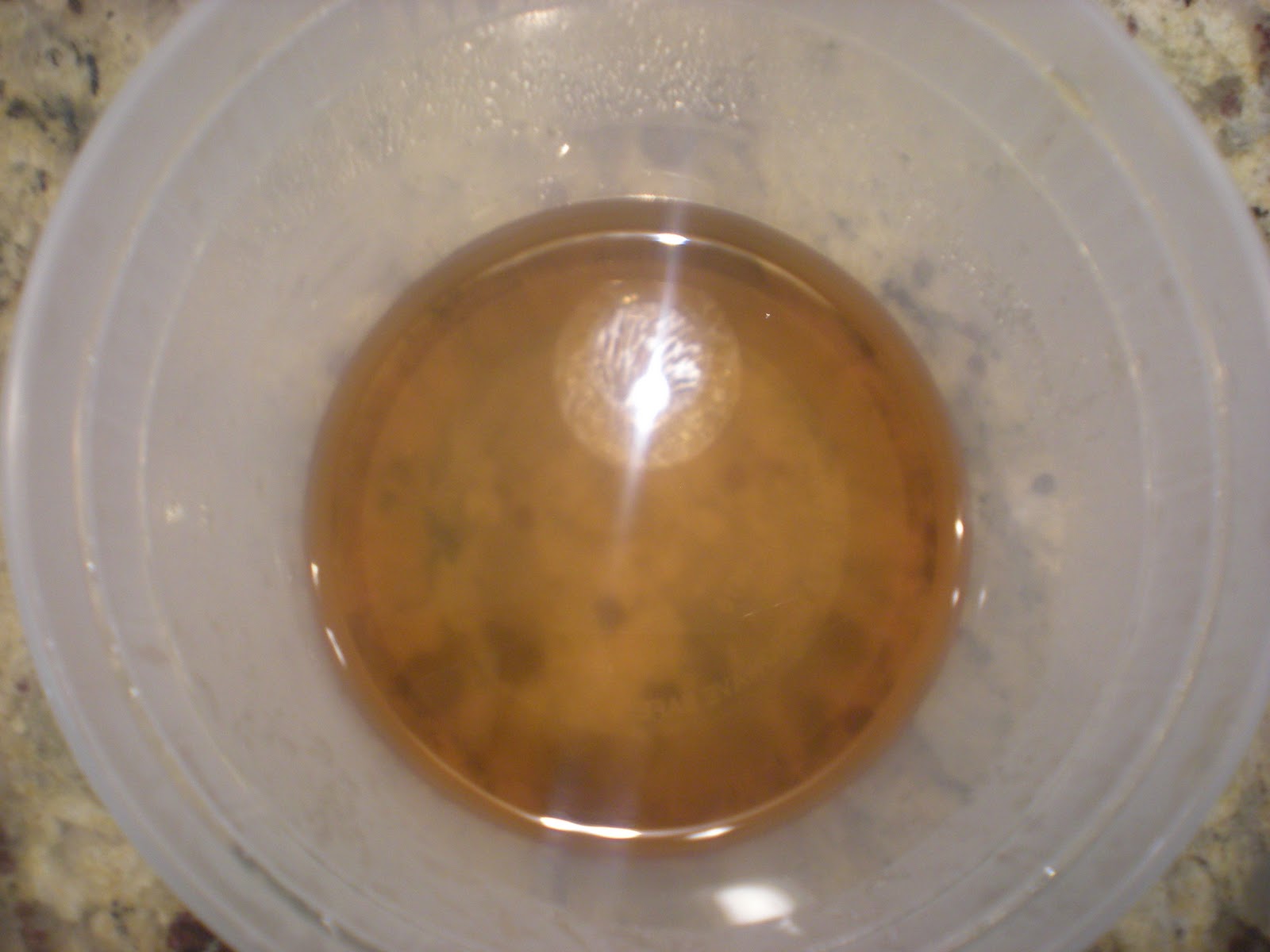 |
| For this container I only put water and brown sugar in it and I microwaved it for 40 sec as well This was the one with absolutely no sugar in it |
 |
| In this container I put water and brown sugar in it, but i boiled this one This container also had no sugar left in it |
 |
| Here is an overview of the experiment!!! |
Sunday, September 12, 2010
Test One: Number Three
Tell me what you think about...im starting to think that the dolls are a little bit creepy...haha!
Test One: Number Three
 |
| This is the " cotton candy model " This is the most current model that we still have today Inside the nucleus we have protons and nuetrons ( protons white balls and nuetrons green balls ) The elctrons are also in orbit ( dolls are electrons is orbit ) |
 |
| This is Rutherford's model of the atom.... He knew about electrons, but he didn't know that they orbited around the atom ( in this case the dolls are the electrons ) He also discovered the nucleus, but his model was not complete yet because he had no neutrons in it ( the little white balls is the nucleus ) |
 |
| This is Bohr's model of the atom He was a student of Rutherford's and proved him wrong He figured out that the electrons aren't just in some random place, but they actually orbit around the nucleus ( the dolls are walking around the nucleus as you can see in a single file ) I was trying to be creative....so here is my attempt! haha |
Subscribe to:
Posts (Atom)